Submission Deadline
ULIP Logixtics Hackathon 2.0#uliphackathon
Welcome to the ULIP Logixtics Hackathon 2.0
view more...offline1 - 4 Team Members

About
ULIP Logixtics Hackathon 2.0, presented by NLDSL (NICDC Logistics Data Services Limited) in collaboration with Niti Aayog – Atal Innovation Mission and Startup India, aims to address the pressing issues of logistics sector by fostering innovation and creativity among talented individuals and teams. We invite you to join this initiative to develop groundbreaking solutions that can revolutionize the logistics landscape in India.
Why Participate?
- Be part of a national movement: Join a community of passionate innovators working to improve the future of logistics.
- Showcase your talent: Demonstrate your creativity and problem- solving abilities to a national audience.
- Gain valuable experience: Learn from industry experts, develop new skills, and network with like-minded individuals.
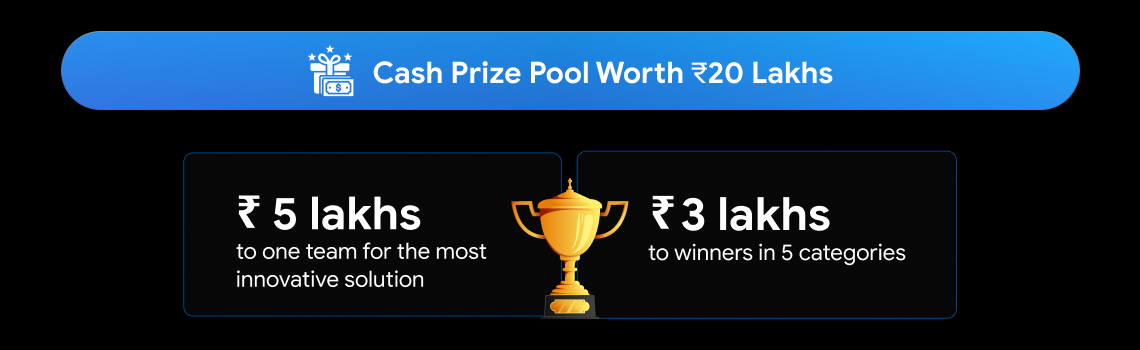
- Win exciting prizes: Compete for cash prizes, mentorship opportunities, and recognition.
By participating in ULIP Logixtics Hackathon 2.0, you can make a significant contribution to the transformation of the Indian logistics sector.
About Unified Logistics Interface Platform (ULIP)
ULIP acts as a digital gateway for industry players, giving them access to logistics-related datasets from government systems through API-based integration. It is one of the key initiatives under PM GatiShakti, launched by the Hon’ble Prime Minister as part of the National Logistics Policy on 17th September 2022.
ULIP provides an integrated platform that can be effectively utilized by the stakeholders to enhance efficiency, utilize technology, and reduce the cost of logistics in India.
Challenges

Sustainable Logistics Challenge
How can we leverage technology and innovation to transform the logistics industry into a more sustainable and environmentally responsible sector, while minimizing its carbon footprint and preserving natural resources? Sample Areas of Focus: Carbon Neutrality and Emissions Reduction: Developing and implementing strategies to reduce greenhouse gas emissions across the entire logistics value chain, including last-mile delivery, transportation, and warehousing. This involves exploring renewable energy sources, improving fuel efficiency, and adopting sustainable packaging solutions. Resource Efficiency: Optimizing logistics operations to reduce resource consumption, including energy, water, and materials. Security and Privacy: Implementing robust security measures to protect sensitive data, prevent fraud, and maintain privacy. Environmental Impact Assessment: Conducting comprehensive assessments to measure and monitor the environmental impact of logistics activities, enabling targeted interventions and continuous improvement.
Data-Driven Optimization of Logistics Operations Challenge
How can we leverage advanced data analytics and machine learning to optimize logistics operations, improve efficiency, and enhance decision-making across the entire value chain? Sample Areas of Focus: Data Integration and Standardization: Streamlining the process of collecting, integrating, and standardizing data from diverse sources (government agencies, private logistics providers, IoT devices, etc.) to create a comprehensive and reliable dataset. Real-Time Visibility and Transparency: Developing data-driven solutions that provide real-time visibility and transparency into logistics operations, enabling stakeholders to track shipments, identify potential bottlenecks, and make informed decisions. Predictive Analytics and Optimization: Utilizing machine learning algorithms to analyze historical data, identify patterns, and predict future trends. This can be applied to areas such as demand forecasting, route optimization, inventory management, and risk mitigation. Data-Driven Decision Making: Empowering logistics professionals with data-driven insights to support evidence-based decision-making, improve operational efficiency, and reduce costs. Continuous Improvement: Establishing a framework for ongoing data analysis and process improvement to ensure that logistics operations remain agile and adaptable to changing market conditions.
Unified Documentation and Digital Transformation Challenge
How can we develop and implement a secure, standardized, and interoperable digital identity system for entities involved in the logistics sector, enabling seamless data exchange, enhanced traceability, and improved compliance? Sample Areas of Focus: Digital Identity Framework: Creating a robust digital identity framework that uniquely identifies and verifies individuals, businesses, and assets within the logistics ecosystem. Regulatory Compliance: Ensuring that the digital identity system aligns with relevant regulatory requirements, such as customs regulations, trade agreements, and data protection laws. Security and Privacy: Implementing robust security measures to protect sensitive data, prevent fraud, and maintain privacy. Stakeholder Collaboration: Fostering collaboration between industry stakeholders, government agencies, and technology providers to develop and implement a standardized digital identity system that benefits the entire logistics sector.
Operational Efficiency and Optimization Challenge
How can we leverage advanced technologies and data-driven approaches to optimize logistics operations, reduce costs, and enhance efficiency across the entire value chain? Sample Areas of Focus: Route Optimization: Utilizing AI and analytics to optimize transportation routes, reduce fuel consumption, and minimize delivery times. Inventory Management: Implementing efficient inventory management practices and technologies to improve stock accuracy, reduce holding costs, and minimize waste. Asset Utilization: Maximizing the utilization of assets, such as trucks and containers, to reduce idle time and improve overall operational efficiency. Process Automation: Identifying opportunities to automate manual processes, such as gate operations, warehouse tasks, and documentation, to improve accuracy, reduce errors, and increase throughput. Data-Driven Decision Making: Leveraging data analytics to gain insights into operational performance, identify bottlenecks, and make data-driven decisions to improve efficiency and reduce costs. Technology Integration: Ensuring seamless integration of various logistics technologies, such as transportation management systems, warehouse management systems, and yard management systems, to create a unified and efficient operational platform.
Tech-Driven Logistics Innovation Challenge
How can we leverage cutting-edge technologies, such as AI, ML, blockchain, and IoT, to revolutionize the logistics industry, improve efficiency, reduce costs, and enhance sustainability? Sample Areas of Focus: AI and Machine Learning: Applying AI and ML algorithms to optimize transportation routes, predict demand, improve inventory management, and automate tasks such as freight matching and route planning. Blockchain Technology: Utilizing blockchain to ensure transparency, traceability, and security in supply chain transactions, from origin to destination. Internet of Things (IoT): Implementing IoT sensors and devices to track shipments in real-time, monitor asset conditions, and optimize operations. Data Analytics: Leveraging data analytics to gain insights into logistics performance, identify bottlenecks, and make data-driven decisions. Automation and Robotics: Exploring the use of automation and robotics to streamline processes, reduce manual labor, and improve efficiency in areas such as warehousing, transportation, and last-mile delivery. Emerging Technologies: Investigating the potential of emerging technologies, such as drones, autonomous vehicles, and 3D printing, to transform the logistics landscape.
Sustainable Logistics Challenge
How can we leverage technology and innovation to transform the logistics industry into a more sustainable and environmentally responsible sector, while minimizing its carbon footprint and preserving natural resources? Sample Areas of Focus: Carbon Neutrality and Emissions Reduction: Developing and implementing strategies to reduce greenhouse gas emissions across the entire logistics value chain, including last-mile delivery, transportation, and warehousing. This involves exploring renewable energy sources, improving fuel efficiency, and adopting sustainable packaging solutions. Resource Efficiency: Optimizing logistics operations to reduce resource consumption, including energy, water, and materials. Security and Privacy: Implementing robust security measures to protect sensitive data, prevent fraud, and maintain privacy. Environmental Impact Assessment: Conducting comprehensive assessments to measure and monitor the environmental impact of logistics activities, enabling targeted interventions and continuous improvement.
Data-Driven Optimization of Logistics Operations Challenge
How can we leverage advanced data analytics and machine learning to optimize logistics operations, improve efficiency, and enhance decision-making across the entire value chain? Sample Areas of Focus: Data Integration and Standardization: Streamlining the process of collecting, integrating, and standardizing data from diverse sources (government agencies, private logistics providers, IoT devices, etc.) to create a comprehensive and reliable dataset. Real-Time Visibility and Transparency: Developing data-driven solutions that provide real-time visibility and transparency into logistics operations, enabling stakeholders to track shipments, identify potential bottlenecks, and make informed decisions. Predictive Analytics and Optimization: Utilizing machine learning algorithms to analyze historical data, identify patterns, and predict future trends. This can be applied to areas such as demand forecasting, route optimization, inventory management, and risk mitigation. Data-Driven Decision Making: Empowering logistics professionals with data-driven insights to support evidence-based decision-making, improve operational efficiency, and reduce costs. Continuous Improvement: Establishing a framework for ongoing data analysis and process improvement to ensure that logistics operations remain agile and adaptable to changing market conditions.
Unified Documentation and Digital Transformation Challenge
How can we develop and implement a secure, standardized, and interoperable digital identity system for entities involved in the logistics sector, enabling seamless data exchange, enhanced traceability, and improved compliance? Sample Areas of Focus: Digital Identity Framework: Creating a robust digital identity framework that uniquely identifies and verifies individuals, businesses, and assets within the logistics ecosystem. Regulatory Compliance: Ensuring that the digital identity system aligns with relevant regulatory requirements, such as customs regulations, trade agreements, and data protection laws. Security and Privacy: Implementing robust security measures to protect sensitive data, prevent fraud, and maintain privacy. Stakeholder Collaboration: Fostering collaboration between industry stakeholders, government agencies, and technology providers to develop and implement a standardized digital identity system that benefits the entire logistics sector.
Operational Efficiency and Optimization Challenge
How can we leverage advanced technologies and data-driven approaches to optimize logistics operations, reduce costs, and enhance efficiency across the entire value chain? Sample Areas of Focus: Route Optimization: Utilizing AI and analytics to optimize transportation routes, reduce fuel consumption, and minimize delivery times. Inventory Management: Implementing efficient inventory management practices and technologies to improve stock accuracy, reduce holding costs, and minimize waste. Asset Utilization: Maximizing the utilization of assets, such as trucks and containers, to reduce idle time and improve overall operational efficiency. Process Automation: Identifying opportunities to automate manual processes, such as gate operations, warehouse tasks, and documentation, to improve accuracy, reduce errors, and increase throughput. Data-Driven Decision Making: Leveraging data analytics to gain insights into operational performance, identify bottlenecks, and make data-driven decisions to improve efficiency and reduce costs. Technology Integration: Ensuring seamless integration of various logistics technologies, such as transportation management systems, warehouse management systems, and yard management systems, to create a unified and efficient operational platform.
Tech-Driven Logistics Innovation Challenge
How can we leverage cutting-edge technologies, such as AI, ML, blockchain, and IoT, to revolutionize the logistics industry, improve efficiency, reduce costs, and enhance sustainability? Sample Areas of Focus: AI and Machine Learning: Applying AI and ML algorithms to optimize transportation routes, predict demand, improve inventory management, and automate tasks such as freight matching and route planning. Blockchain Technology: Utilizing blockchain to ensure transparency, traceability, and security in supply chain transactions, from origin to destination. Internet of Things (IoT): Implementing IoT sensors and devices to track shipments in real-time, monitor asset conditions, and optimize operations. Data Analytics: Leveraging data analytics to gain insights into logistics performance, identify bottlenecks, and make data-driven decisions. Automation and Robotics: Exploring the use of automation and robotics to streamline processes, reduce manual labor, and improve efficiency in areas such as warehousing, transportation, and last-mile delivery. Emerging Technologies: Investigating the potential of emerging technologies, such as drones, autonomous vehicles, and 3D printing, to transform the logistics landscape.
Schedule
Sat Oct 05 2024 (Coordinated Universal Time)
Registrations Open
Fri Oct 25 2024 00:00:00 GMT+0000 (Coordinated Universal Time)
Registrations Close
Fri Oct 25 2024 00:00:00 GMT+0000 (Coordinated Universal Time)
Submissions Close
Tue Nov 05 2024 18:30:00 GMT+0000 (Coordinated Universal Time)
Initial Shortlist Announcement
Fri Nov 08 2024 18:30:00 GMT+0000 (Coordinated Universal Time)
Prototype Development Starts
Sat Nov 30 2024 18:30:00 GMT+0000 (Coordinated Universal Time)
Prototype Development Closes
Sat Nov 30 2024 18:30:00 GMT+0000 (Coordinated Universal Time)
Final Submissions
Fri Dec 06 2024 18:30:00 GMT+0000 (Coordinated Universal Time)
Final Shortlist Announcement
Thu Dec 19 2024 18:30:00 GMT+0000 (Coordinated Universal Time)
Grand Finale
*Timeline is subject to change/tentative
Rewards and benefits
Frequently Asked Questions
ULIP Logixtics Hackathon 2.0 is open to the Students, technologist, freelancers and professional developer community.
The entry should be functional for review by the judges.
There is no participation fee.
Yes, participants are required to submit a prototype. If you use any database like SQL Server or PostgreSQL you can also submit a database dump along with your submission.
The organizing team will approve and confirm your participation. Shortlisted teams will receive a confirmation email and it will reflect on the user dashboard.
Yes, all team members can login from their account and submit application.