Visit the Sampurna Website
Go to: www.sampurna.food

 Apply Now
 The Sampurna Grand Challenge 2026 is the flagship innovation pathway within the multisectoral platform Sampurna 2026, designed to identify, evaluate and enable adoption of scalable innovative solutions addressing post-harvest inefficiencies contribution to food loss across Karnataka’s agriculture and horticulture value chains. The challenge supports both technology and non-technology approaches including practices, business models, services and institutional mechanisms, and links selected solutions with policy systems, markets and capital to enable real world adoption and improved farmer incomes.
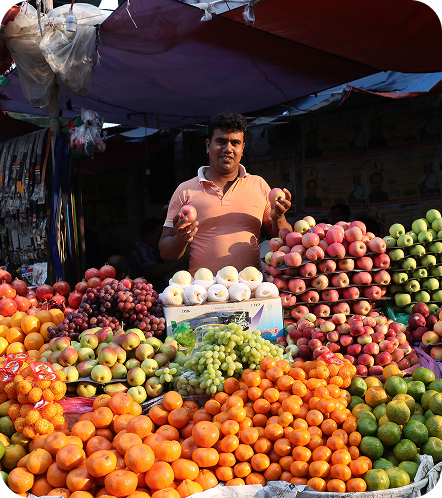
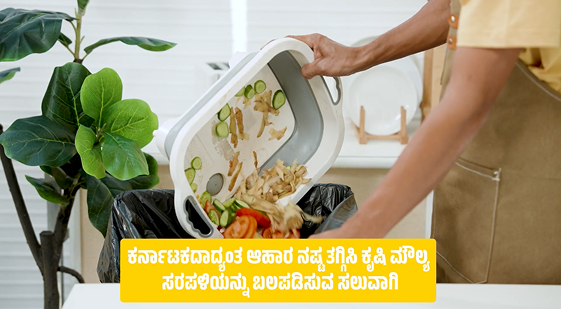
India loses an estimated ₹92,000 crore worth of food annually, with post-harvest losses accounting for a significant share, particularly in fruits and vegetables. Nearly one-third of food produced globally is lost before it reaches consumers, affecting farmer livelihoods, food affordability, nutrition security and climate impact.
Karnataka accounts for nearly 9.6% of the country’s horticultural area and about 7.2% of national horticultural production. Horticulture contributes nearly 30% of the state’s agricultural Gross Value Added.

Submit your application between 20 March – 10 July 2026
Start Your ApplicationUnderstanding the scale of food loss in Karnataka

Annual Food Loss in India

Post-Harvest Loss

National Horticulture
Production

~30% of Karnataka's agricultural GVA from horticulture is lost each year

Karnataka is one of India’s leading horticulture-producing states, yet a significant share of harvested produce fails to translate into realised value.
An estimated 15–30% of fruits and vegetables are lost post-harvest due to systemic gaps in aggregation, storage, processing, logistics and market linkages.
Applications are invited for solutions addressing priority crops including Onion, Mango, Banana, Tomato, Grapes, Pomegranate and Pineapple.
The innovation challenge is structured around seven priority areas targeting different intervention points within the value chain.
While the challenge is organised into seven thematic categories, the horticulture value chain functions as an interconnected system. Many solutions will naturally span more than one category — and that is by design. A logistics platform may incorporate demand forecasting. A packaging innovation may enable cold-chain efficiency. An aggregation model may integrate finance and digital tools. Applicants are encouraged to apply under the category that best reflects their primary intervention, even where their solution addresses multiple areas.
Post-harvest losses in Karnataka are concentrated at the farm gate, where a sudden glut of produce — onions, tomatoes, bananas — meets insufficient infrastructure for sorting, cooling, and basic processing.
Without accessible packhouses or shared cooling, smallholders have no choice but to sell immediately, flooding local markets and accepting distress prices. Even modest improvements in on-farm handling — better grading, shaded storage, low-cost cooling — can significantly reduce spoilage and stabilise farmer incomes during peak harvest windows.
During peak harvest periods, the sudden surge in supply frequently overwhelms local handling capacity — leaving smallholders with little option but to sell immediately at whatever price the market offers.
Applications are invited for solutions across crops; however, the programme places special emphasis on the following crops: Onion, Mango, Banana, Tomato, Grapes, Pomegranate, and Pineapple.
Your solution focuses primarily on transport logistics, digital market tools, or finance — those are covered in other categories.
Apply NowInadequate packaging is a hidden but significant source of loss across Karnataka’s supply chains. Produce is routinely transported in thin jute sacks or open crates that offer little protection against bruise, dehydration, and contamination — damage that is invisible at the farm gate but results in rejections and discounts at the market. Better packaging protects physical quality, slows spoilage, and can signal to buyers that the produce meets a consistent standard. There is a growing demand for solutions that are both effective and environmentally sustainable.
Across Karnataka’s supply chains, a significant share of produce damage occurs not in the field but in transit — the result of inadequate containers and packaging that offer little protection against bruising, dehydration, or contamination.
Applications are invited for solutions across crops; however, the programme places special emphasis on the following crops: Onion, Mango, Banana, Tomato, Grapes, Pomegranate, and pineapple.
Your solution focuses primarily on transport logistics, digital market tools, or finance — those are covered in other categories.
Apply NowSlow and uncoordinated production after harvest is one of the most avoidable sources of loss in Karnataka. During peak season, trucks sit idle waiting for loads, roads to major mandis become congested, and perishables spend hours — or days — without cooling. Many smallholders have no reliable way to book transport or know when vehicles are available, forcing rushed, unoptimized trips that arrive at market either too early or too late. Coordinated logistics infrastructure — scheduling, load pooling, and cold-chain access — can significantly reduce time-in-transit and spoilage.
At peak season, the gap between farm-gate availability and market readiness is often measured in hours of preventable delay — trucks waiting idle, produce sitting unrefrigerated, and farmers bearing the cost of a system that was not designed for perishable volumes.
Applications are invited for solutions across crops; however, the programme places special emphasis on the following crops: Onion, Mango, Banana, Tomato, Grapes, Pomegranate, and pineapple.
Your solution focuses primarily on transport logistics, digital market tools, or finance — those are covered in other categories.
Apply NowKarnataka’s horticulture sector is dominated by smallholder farmers with fragmented landholdings and limited individual market power. Without collective structures, each farmer bears the full cost of transport, faces weak negotiating leverage, and must sell quickly regardless of price. Aggregation — whether through FPOs, village collection centres, or informal farmer groups — directly addresses these constraints by enabling volume-based contracts, shared logistics, and joint quality management. In areas where formal FPOs are still nascent, even simple community-led models can deliver significant impact.
Where farmers sell individually, they typically face higher transport costs, weaker bargaining positions, and greater pressure to sell quickly. Even modest collective structures — a shared collection point, a joint grading shed — can meaningfully shift these dynamics.
Applications are invited for solutions across crops; however, the programme places special emphasis on the following crops: Onion, Mango, Banana, Tomato, Grapes, Pomegranate, and pineapple.
Your solution focuses primarily on transport logistics, digital market tools, or finance — those are covered in other categories.
Apply NowEven where appropriate post-harvest technologies exist, many FPOs and small agri-enterprises in Karnataka cannot access the finance to adopt them. Conventional bank loans are designed for crop production — not for cold rooms, transport equipment, or packhouse upgrades — and are rarely disbursed in time for seasonal needs. Working capital gaps force farmers to sell at harvest-time lows rather than stores and wait for better prices. Innovative financial products tailored to the short cycles, seasonal cash flows, and asset profiles of horticulture enterprises are essential to enabling the adoption of loss-reducing solutions.
An FPO that cannot access short-term working capital during the harvest window may be unable to store produce, hire transport, or invest in basic handling improvements — forcing distress sales regardless of the quality of its produce.
Applications are invited for solutions across crops; however, the programme places special emphasis on the following crops: Onion, Mango, Banana, Tomato, Grapes, Pomegranate, and pineapple.
Your solution focuses primarily on transport logistics, digital market tools, or finance — those are covered in other categories.
Apply NowA significant share of post-harvest losses in Karnataka stems not only from infrastructure gaps but also from fragmented, delayed, and disconnected decision-making across the value chain. Farmers decide when to harvest without knowing storage availability. Traders dispatch trucks without knowing market conditions. FPOs sell without visibility on competing supply arrivals. These decisions — made in isolation across dozens of actors — create systemic inefficiencies: produce gluts, underutilised cold rooms, and avoidable spoilage. When farmers and supply chain actors have access to timely, integrated digital information, they make better decisions — and loses fall. What Karnataka needs are not just more data dashboards, but systems that connect actors and translate data into action.
When actors across the value chain make harvest, storage, and dispatch decisions in isolation — without shared information on supply volumes, market conditions, or infrastructure availability — the result is predictable: gluts, delays, and avoidable spoilage.
Applications are invited for solutions across crops; however, the programme places special emphasis on the following crops: Onion, Mango, Banana, Tomato, Grapes, Pomegranate, and pineapple.
Solutions that focus only on a single operational function (e.g. route optimization, warehouse management, or standalone price dashboards or single-function tools) are better suited to other categories (e.g. logistics optimization) unless they are embedded within a broader, integrated decision-making system. A standalone price dashboard, for example, may still qualify if it is designed to drive actionable decisions across multiple value chain actors.
Your solution is a standalone single-function tool — such as route optimisation only, or a price dashboard only — unless it is embedded within a broader, integrated decision system. Note: a standalone price dashboard may still qualify if it is designed to drive actionable decisions across multiple value chain actors.
Apply NowEven in well-functioning supply chains, a portion of Karnataka’s horticulture output is unmarketable in its fresh form — produce that is off-grade, over-ripe, blemished, or surplus to what primary markets can absorb. In the absence of structured secondary uses, this material is sold at deep discounts or discarded entirely. A circular economy approach reframes this waste as feedstock: surplus mangoes become puree; blemished onions become dehydrated flakes; pomegranate peel yields extract for nutraceuticals; organic waste becomes biogas or compost. Technologies and business models that unlock this secondary value streams convert losses into income — for farmers, processors, and communities.
A significant share of produce that fails to meet primary market standards is not inherently worthless — it represents raw material for processing, energy generation, or soil enrichment that, without structured secondary channels, simply goes to waste.
Applications are invited for solutions across crops; however, the programme places special emphasis on the following crops: Onion, Mango, Banana, Tomato, Grapes, Pomegranate, and pineapple.
Your solution is about primary marketing, packaging, or logistics unless it specifically applies to waste or surplus streams.
Apply NowA high-profile Steering Committee chaired by Chief Secretary Dr. Shalini Rajneesh, IAS, serves as the apex strategic and advisory body guiding Sampurna 2026.
It provides direction on the platform’s priorities, outcomes, and key strategic decisions, while also reviewing and validating important aspects of the Sampurna Grand Challenge framework and design.
• Provide strategic guidance on the platform's direction, priorities and outcomes.
• Review and validate key design decisions of the Grand Challenge when circulated for inputs.
• Champion the platform within your networks — facilitating relevant connections with innovators, investors, buyers or government departments where appropriate.
• Participate in relevant Roadshow sessions.
• Participate in relevant sessions at the Grand Finale Convergence Event, including the Inaugural Session and Award Ceremony on 23 July 2026.
Chief Secretary of Karnataka
Dr. Shalini Rajneesh is the Chief Secretary of Karnataka, a position she has held since July 31, 2024. A woman topper of the 1989 IAS batch (Karnataka cadre), she brings over three decades of distinguished public service to her role. Her career has been defined by a commitment to systemic transformation from strengthening Government to Citizen service delivery and driving Business Process Re-engineering across departments, to spearheading major e-governance initiatives and leveraging big data analytics in public administration. She has championed women's empowerment, entrepreneurship development, and the integration of Corporate Social Responsibility frameworks into governance.
As Chair of the Steering Committee, she lends both institutional authority and strategic depth to the initiative.
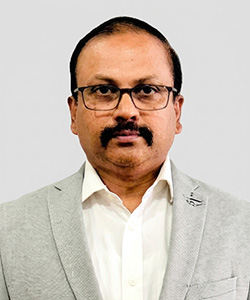
Secretary, Department of Horticulture & Sericulture, Government of Karnataka
R. Girish is a 2010-batch IAS officer of the Karnataka cadre, currently serving as Secretary to the Government in the Department of Horticulture and Sericulture. Over the course of his administrative career, he has held key leadership positions across infrastructure and natural resources, including as Director of Mines and Geology and as CEO and Executive Member of the Karnataka Industrial Area Development Board. In his current role, he has championed the strategic importance of both horticulture and sericulture to Karnataka's rural economy particularly highlighting sericulture as a significant livelihood generator with strong income potential for farming communities. He brings ground-level administrative expertise and a deep policy understanding of Karnataka's agricultural landscape to the Steering Committee.
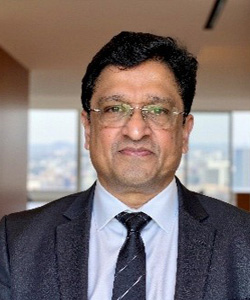
CEO, Bisleri International
Dr. Angelo George is the Chief Executive Officer of Bisleri International and a seasoned business leader with more than three decades of experience across leading organizations including Hindustan Unilever, EID Parry, and Dabur India. Over the course of his career, he has led businesses across India, the Middle East, and South Asia, earning a reputation for driving growth, fostering innovation, and building strong consumer brands in highly competitive markets.
Since taking over as CEO, Dr. George has played a pivotal role in accelerating Bisleri’s growth, strengthening its market leadership, modernizing its brand, and expanding its international presence, including the company’s entry into the UAE market. He has also championed sustainability as a core business priority, helping position Bisleri as a responsible industry leader through initiatives focused on water stewardship, plastic circularity, and environmental awareness. Under his leadership, the company has advanced programmes such as Responsible Use of Plastic, educational campaigns promoting mindful plastic consumption, and pioneering work on Water Credits.
Beyond his corporate responsibilities, Dr. George serves as an Independent Director and contributes actively to industry, policy, and academic institutions. He is a Distinguished Fellow of the Institute of Directors and The Indian Chemical Society, serves on executive committees of the Confederation of Indian Industry and the Indian Chamber of Commerce, and is an Honorary Professor at leading business schools. His contributions have been recognised with the Economic Times Inspiring CEO Award and an Honorary Doctorate in Business Administration from École Supérieure Robert de Sorbon, France.
Co-founder & COO, Jumbotail
Ashish Jhina is the Co-founder and COO of Jumbotail, India's leading B2B grocery marketplace. An IIT Delhi gold medalist in Biochemical Engineering (B.Tech/M.Tech, 2005), Stanford MBA and MS alumnus, and former BCG consultant, he brings a rare combination of technical depth, strategic acumen, and ground-level agricultural insight to his work. A third-generation apple farmer from Himachal Pradesh, Ashish co-founded Jumbotail in 2015 with a founding conviction that production in Indian agriculture happens without knowing what demand exists, a structural gap that Jumbotail's full-stack supply chain platform is built to bridge. Today, the company connects 250,000+ kirana stores across 50+ cities through next-day logistics, embedded fintech, and agri-market linkages, and achieved unicorn status following a $120 million Series D in 2025 ($263 million in total funding). Prior to Jumbotail, he also founded NextDrop, a social enterprise focused on water access tracking.
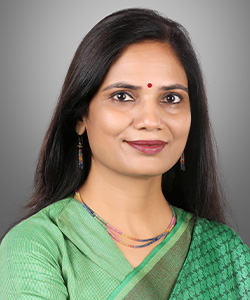
SVP, Global CSR, HCLTech & Director, HCL Foundation
Dr. Nidhi Pundhir is an international humanitarian services and socio-economic-environmental development specialist with more than 27 years of experience advancing human rights and environmental action at national and international levels. As Senior Vice President, Global CSR at HCLTech, she leads the company's global CSR agenda and heads HCL Foundation, HCLTech's CSR arm in India. In this role, she has envisioned HCLTech's flagship Global CSR Policy and built HCL Foundation's vision, mission, and strategy, ensuring high-quality programme delivery that drives meaningful impact on the ground across education, health, livelihoods, and community empowerment. Her prior career includes senior roles as Director of Programme Development, Asia at SOS Children's Villages and as Global Advisor on Child Protection in Development at Plan International's International Headquarters in London. Dr. Pundhir holds a Doctorate in Public Health Management from IIHMR University, Jaipur with a thesis on the right to health during the first 1,000 days of life for children living in slums and an M.Phil in Health Systems Management from BITS Pilani.
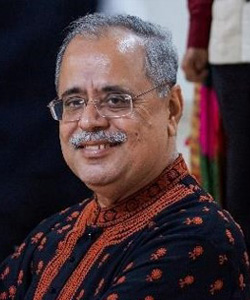
IAS Retd.; Former Head of Country Office, UNEP India
Atul Bagai is a senior environmental policy leader with over four decades of experience spanning the Indian Administrative Service and the United Nations Environment Programme (UNEP). During his 17-year IAS career, he served in several senior positions including as Chief of Staff to two Union Ministers (Ministry of Finance and Ministry of External Affairs), Chief of Staff to a Chief Minister, and as Director of the Ozone Cell at the Ministry of Environment and Forests. He joined UNEP's Ozone Action Programme in 2000 as Regional Officer for South Asia and subsequently served as Senior Regional Coordinator for Asia, before leading UNEP's India Country Office. His work at UNEP spanned climate change, circular economy, plastic pollution, resource efficiency, and post-harvest food loss and cold chain sustainability. He was instrumental in designing ozone-climate synergy initiatives across Maldives, Bhutan, and Mongolia, and led India's hydro-chloro-fluoro-carbon phase-out plan incorporating energy efficiency and cold chain components. Post-retirement, he serves as Senior Advisor at Dalberg and chairs strategic initiatives committees at the Bharat Subcontinent Agri Foundation (BSAF) and the India Middle East Agri Alliance (IMEAA). He holds a post-graduate degree in History from the University of Delhi and has received the US EPA Award and Bhutan's National Order of Merit.
Director, CSIR-CFTRI (Central Food Technological Research Institute), Mysuru
Dr. Giridhar Parvatam is the Director of the CSIR-Central Food Technological Research Institute (CSIR-CFTRI), Mysuru, a position he assumed in September 2025. He holds an MSc and PhD in Microbiology from Kakatiya University with doctoral research focused on mycotoxin control in spices and dried fruits and has worked as a scientist at CFTRI since 1999. His research expertise spans plant biotechnology, food science, and bioactive secondary metabolites, with significant contributions to the development of natural colourants, non-caloric sweeteners, and nutraceuticals from underutilised plant sources. He has published over 231 scholarly articles (h-index 53; 8,635+ citations), holds 9 patents, has supervised 17 PhD candidates, and holds fellowships from seven national and international scientific academies. He serves on scientific panels for BIS, FSSAI, and the National Biodiversity Authority, and has received sixteen awards recognising his contributions to food science and biotechnology.

Chief Executive, Agri Business Division, ITC
Ganesh Kumar Sundararaman is the Chief Executive of ITC’s Agri Business Division, one of India’s largest integrated agri-value chain enterprises. The business operates across 22 states and works directly with over 2.2 million farmers and 2,150 Farmer Producer Organisations (FPOs) across key value chains including wheat, paddy, spices, coffee, aquaculture, horticulture, and biological extracts.
A Mechanical Engineer by training and a long-serving ITC leader, Ganesh has played a significant role in shaping ITC’s food and agriculture businesses. Prior to leading the Agri Business Division, he served as Chief Executive of ITC Foods’ Staples, Snacks, and Meals businesses. He was part of the team that led ITC’s diversification into branded foods and contributed to building some of India’s most recognised consumer brands, including Aashirvaad, Bingo!, YiPPee!, and Kitchens of India.
Ganesh is a member of the CII National Council on Agriculture and serves on the board of Technico Agri Sciences Ltd., bringing deep expertise in agri-value chains, farmer engagement, and sustainable growth
Co-founder & CEO, DeHaat
Shashank Kumar is the Co-founder and CEO of DeHaat, a full-stack agri-tech platform serving over 12 million farmers across 12 states through 15,000+ centres and 503 farmer producer organisations. An IIT Delhi alumnus, he co-founded DeHaat in 2012 building farmer trust from the ground up, village to village and grew it into one of India's most credible agri-tech enterprises, earning recognition as the only Indian entrant in the THRIVE Top 50 Global AgTech ranking. DeHaat delivers AI-powered crop advisory, agri-inputs, drone spraying, credit, and market linkages through a micro-entrepreneur franchise model. His founding conviction that building farmer trust is the prerequisite for technology adoption at scale remains the defining principle of DeHaat's model, particularly its work in transforming smallholder farmers into commercially connected producers through FPOs across Bihar, Uttar Pradesh, Odisha, and West Bengal.

Co-founder & Director, CAARA
Ambika is a hospitality entrepreneur and the co-founder of CAARA. She holds a B.Sc. in International Hospitality Management from The Ecole Hoteliere de Lausanne and brings over a decade of international experience to her ventures. Her career began in Vietnam, where she launched resorts for Six Senses and managed seven leisure assets for Indochina Capital, including luxury hotels and golf courses.
Driven by a desire to revolutionize India’s food culture, Ambika launched FarmLove, a farming initiative that grows chemical-free produce and serves as an exclusive supplier for CAARA. Since co-founding CAARA with Alice Helme in 2014, she has expanded the company from a catering service into a multi-faceted brand that includes restaurants, curated culinary experiences, and Easy Dining—a unit dedicated to preservative-free meals, sauces, and patisserie and food delivery.
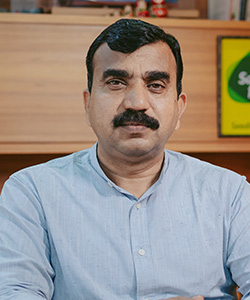
Chairman & Managing Director, Sahyadri Farms
Vilas Vishnu Shinde is the Founder, Chairman and Managing Director of Sahyadri Farmers Producer Company Limited, one of India's largest and most successful Farmer Producer Companies. Founded in 2010 at Nashik, Maharashtra, Sahyadri has grown into a fully integrated farm-to-market horticulture value chain encompassing procurement, grading, cold-chain systems, processing, packaging, domestic marketing, and exports, with a particular focus on grapes and other high-value fruit crops. Today, the organisation counts 22,500+ farmer members and 30,000+ registered farmers managing over 45,000 acres, and recorded a turnover of approximately ₹2,600 crore in FY 2025–26. A trained agricultural professional holding a gold-medal Master's in Agricultural Engineering from MPKV Rahuri, Shri Shinde's path to building this enterprise was forged through firsthand experience of the challenges facing small and marginal farmers, recognising early that fair price realisation, market access, quality compliance, and scientific post-harvest management are as critical as cultivation itself. Inspired by the Amul model of farmer collectivisation, he built Sahyadri into a platform that has strengthened rural livelihoods and established a replicable model of inclusive, sustainable agricultural growth. Sahyadri is actively mentoring 200 FPOs across Maharashtra, Gujarat, Andhra Pradesh, and Karnataka, and attracted significant foreign institutional investment making it the first Indian FPC to do so.
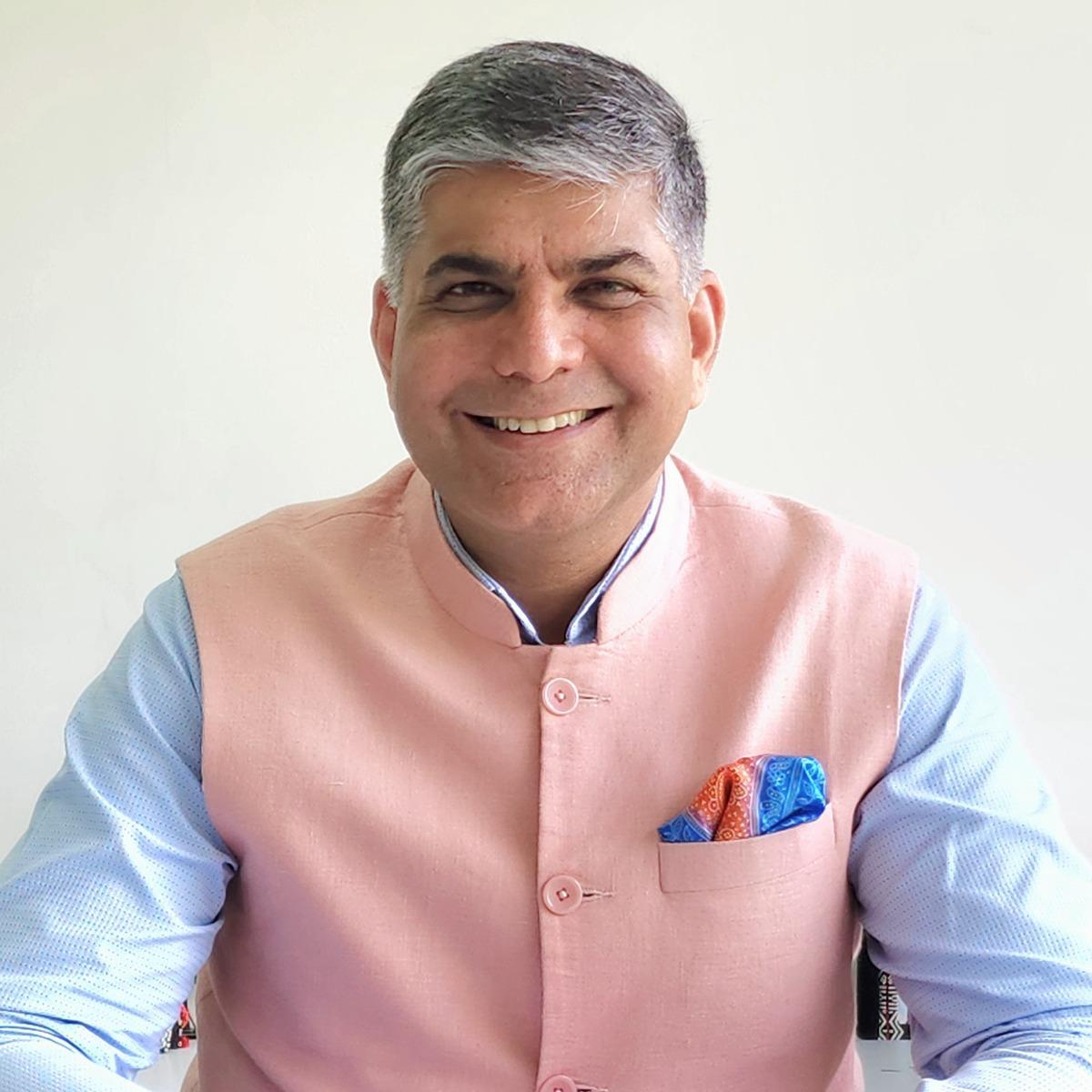
Global Managing Partner, TTC; Secretary General, ABWCI
Dr. Parul Soni is the Global Managing Partner of TTC and Secretary General of ABWCI, with over 28 years of experience providing strategic leadership to large-scale development programmes at national and international levels. His career has been marked by deep engagement in sustainable development driving major cross-sectoral partnerships, strengthening institutional networks, advancing inclusive community participation, and championing frameworks for social accountability and justice. He brings to the Steering Committee a wealth of experience in translating development mandates into structured, scalable outcomes across diverse geographies and sectors.

Country Director, GAIN India
Dr. Bhuvaneswari Balasubramanian is the Country Director of the Global Alliance for Improved Nutrition (GAIN) in India. A social scientist by training, she brings extensive experience working across philanthropies and development consulting, with a particular focus on public health nutrition. Her career has been marked by a commitment to generating robust evidence and translating that evidence into effective programmatic interventions driving measurable improvements in nutrition outcomes across communities throughout India. At GAIN, she leads a portfolio of initiatives addressing food systems, dietary quality, and nutrition-sensitive programming at scale.
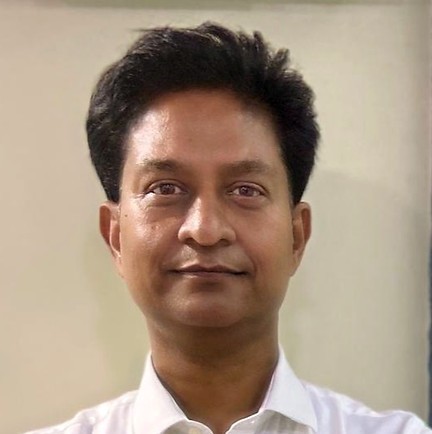
Founder, Fortuna PR
Harsh Vardhan is the Founder of Fortuna PR and a distinguished communications leader with over 25 years of experience in reputation management, media relations, and strategic advocacy. Over his career, he has successfully managed communications strategy for more than 80 IPOs and guided organisations across sectors in shaping public narratives and building enduring institutional credibility. Widely recognised for his strategic foresight and depth of media relationships, he brings to Sampurna 2026 a breadth of stakeholder engagement expertise supporting the platform's mission to drive awareness, foster cross-sector collaboration, and amplify impact across food systems and sustainability initiatives.
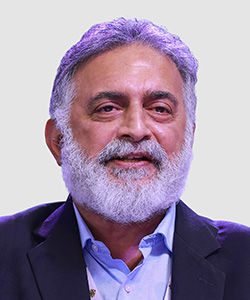
Co-founder & Executive Chairman, MM Activ Sci-Tech Communications Pvt. Ltd.
Jagdish Patankar is the Co-founder and Executive Chairman of MM Activ Sci-Tech Communications Pvt. Ltd., India's leading company in technology events, branding, corporate communications, B2B media, and India partnering services. With decades of experience at the intersection of innovation, industry, and public engagement, he has played a foundational role in shaping India's technology and business events landscape. His expertise in convening cross-sector stakeholders and building platforms for institutional dialogue positions him as a valuable contributor to Sampurna's mission to catalyse collaboration across food systems, sustainability, and innovation.
The Expert Group (EG) for the Sampurna Grand Challenge 2026 brings together a multidisciplinary network of leaders from agriculture, food science, agri-enterprise, investment, technology, academia, and public institutions to guide the evaluation, mentorship, and strategic direction of the challenge.
Founder & CEO, KrishiKalpa Foundation
President, TiE Bangalore
Co-founder & CEO, DeHaat
Chairman & Managing Director, Sahyadri Farms
Eligible applicants include:


applications are open to organizations beyond idea stage, having scalable and market ready solution.
Go to: www.sampurna.food
On the homepage, click on the “Applications” tab in the main menu.
Under the Applications section, you will see a list of active applications. Click on the Sampurna Grand Challenge 2026 application link.
You will be redirected to the Nutrition Connect website, where the official application forms are hosted.
Review the available challenge categories and choose the one that best fits your solution (based on your primary intervention area).
Before accessing the full form, fill out the Eligibility Checker to confirm your eligibility.
Complete all required sections, including:
Ensure you upload:
Click on “Submit Formal Application” to complete the process.
Ensure you submit your application before 10 July 2026.
10 July 2026


07 August 2026
17 August 2026


07 September 2026
09 September 2026


To be announced

Visibility and recognition through platforms

Mentorship by domain experts to enhance business readiness

Felicitation at a high-profile finale ceremony
Networking opportunities with investors and government stakeholders
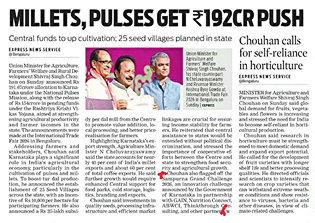
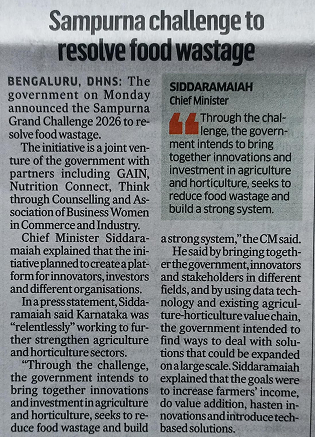
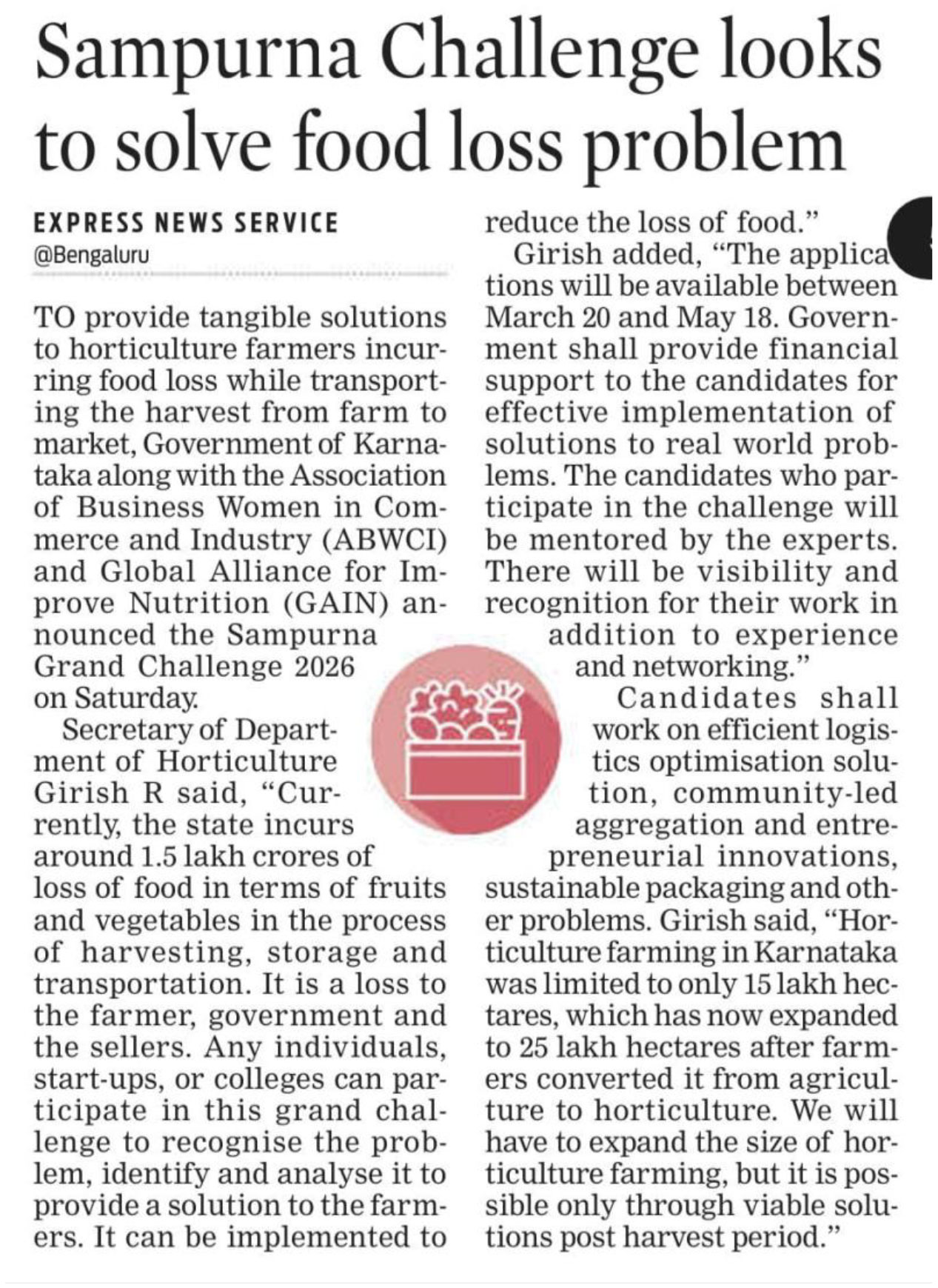
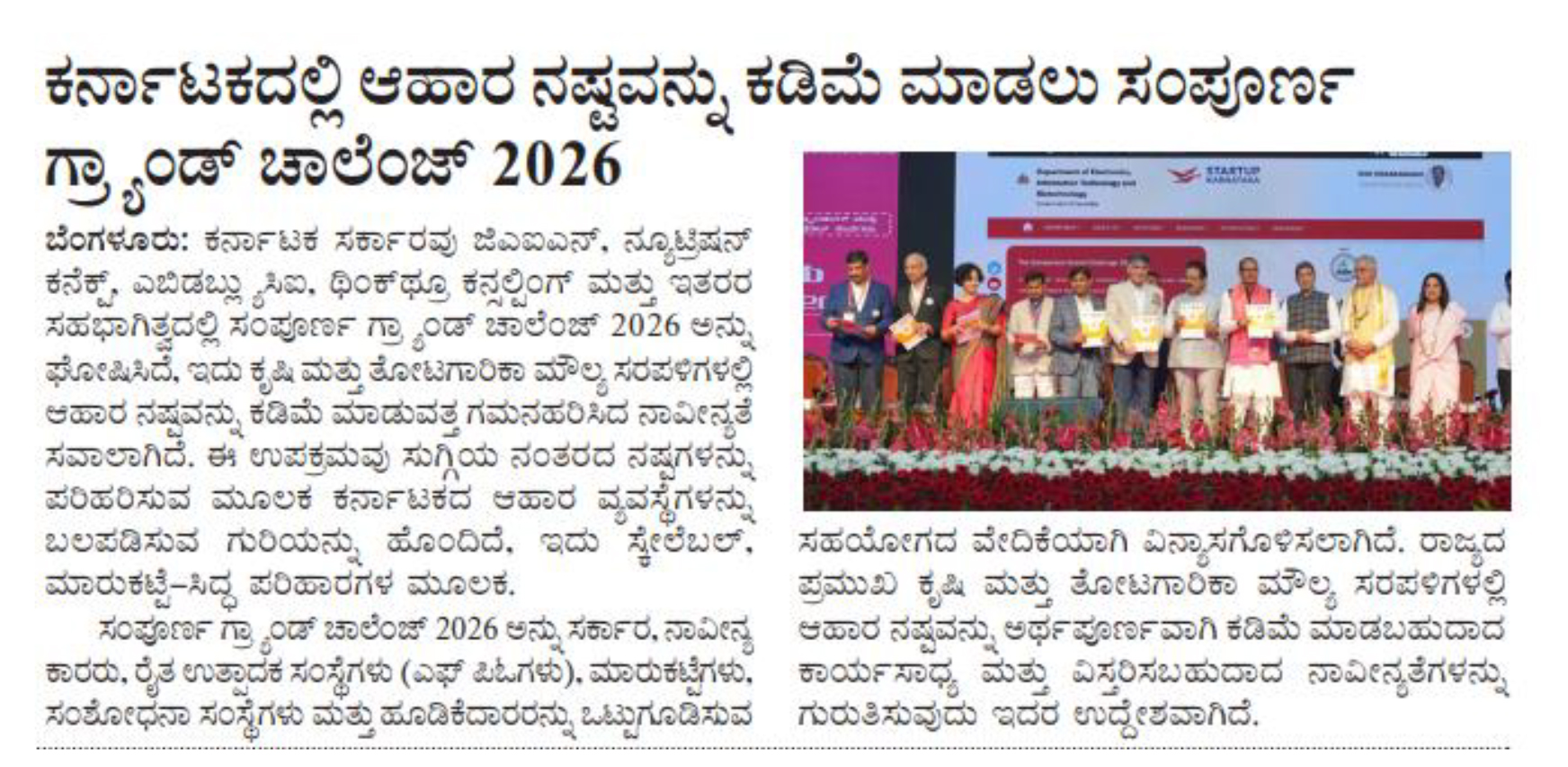
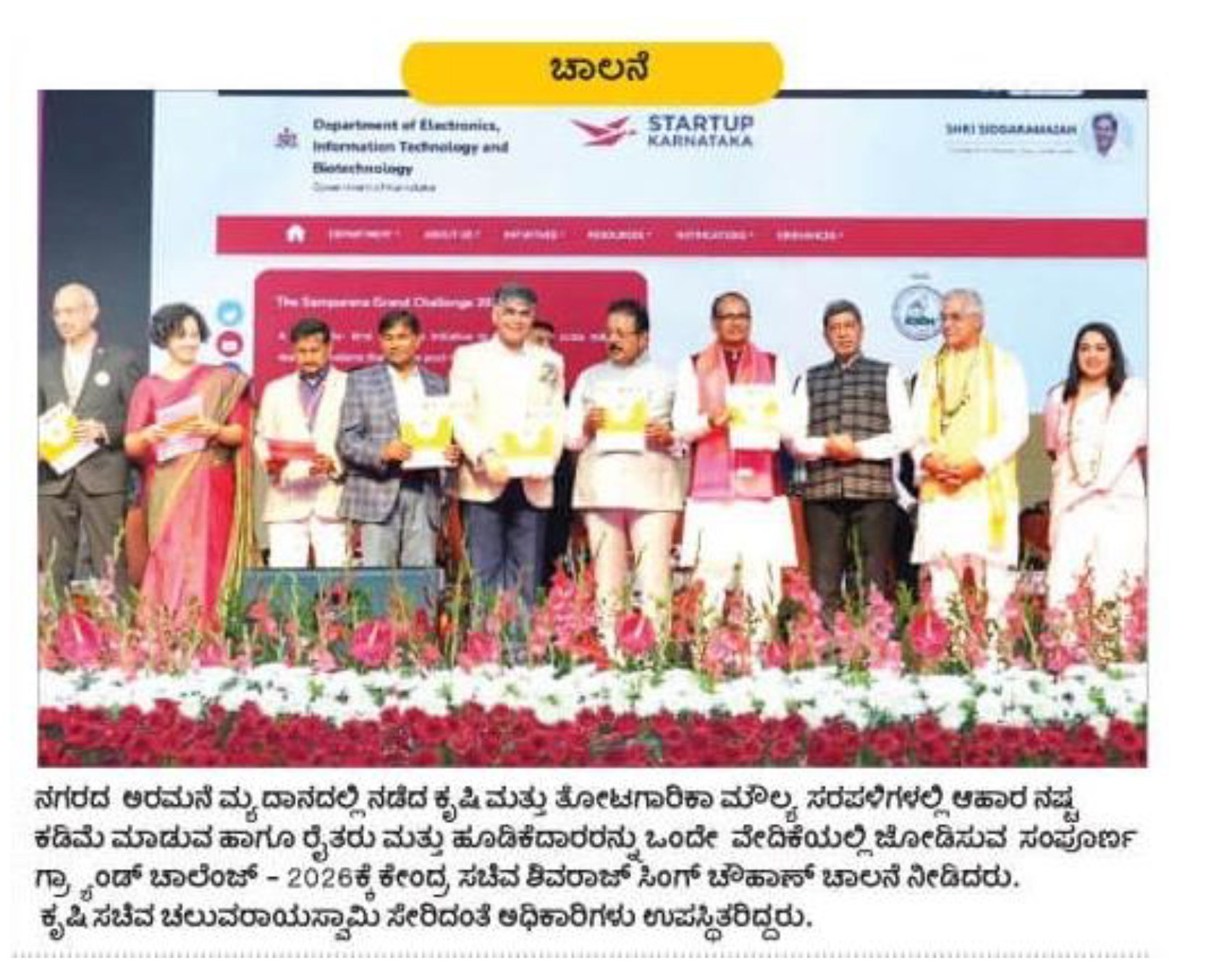
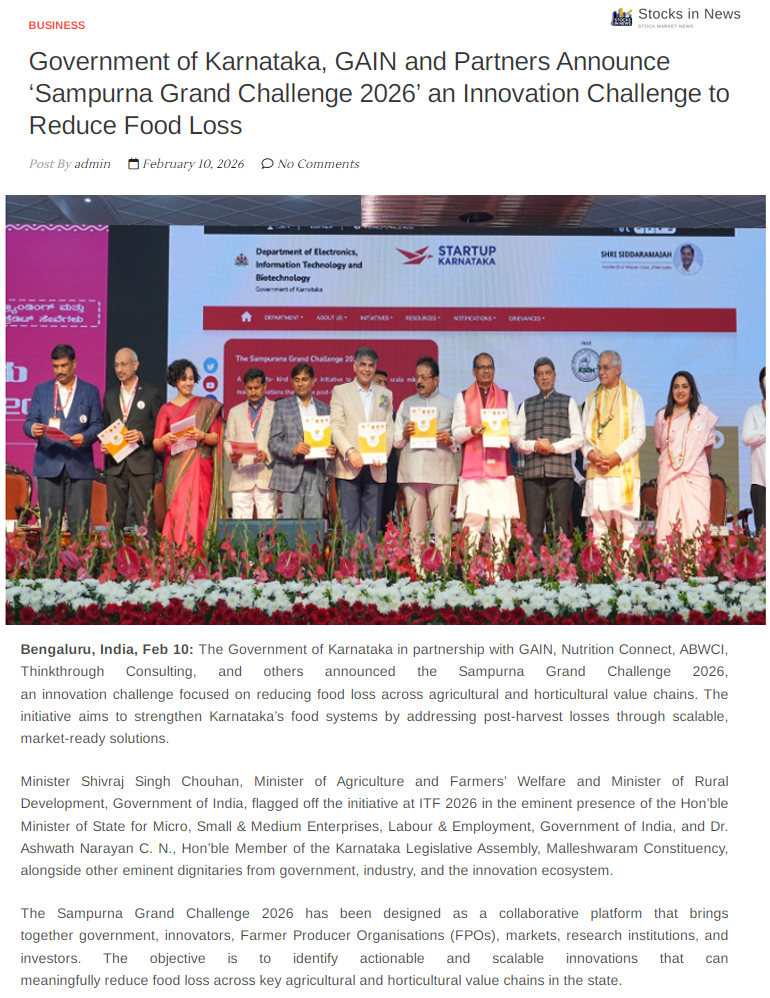
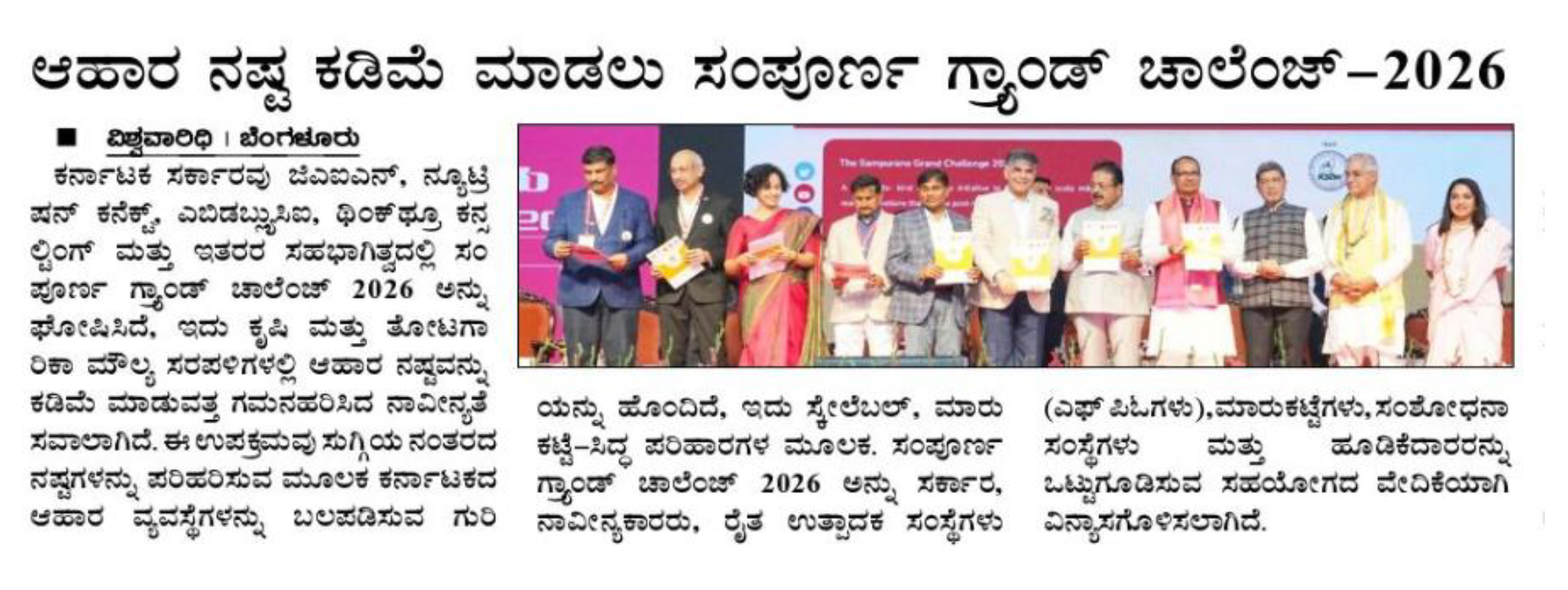
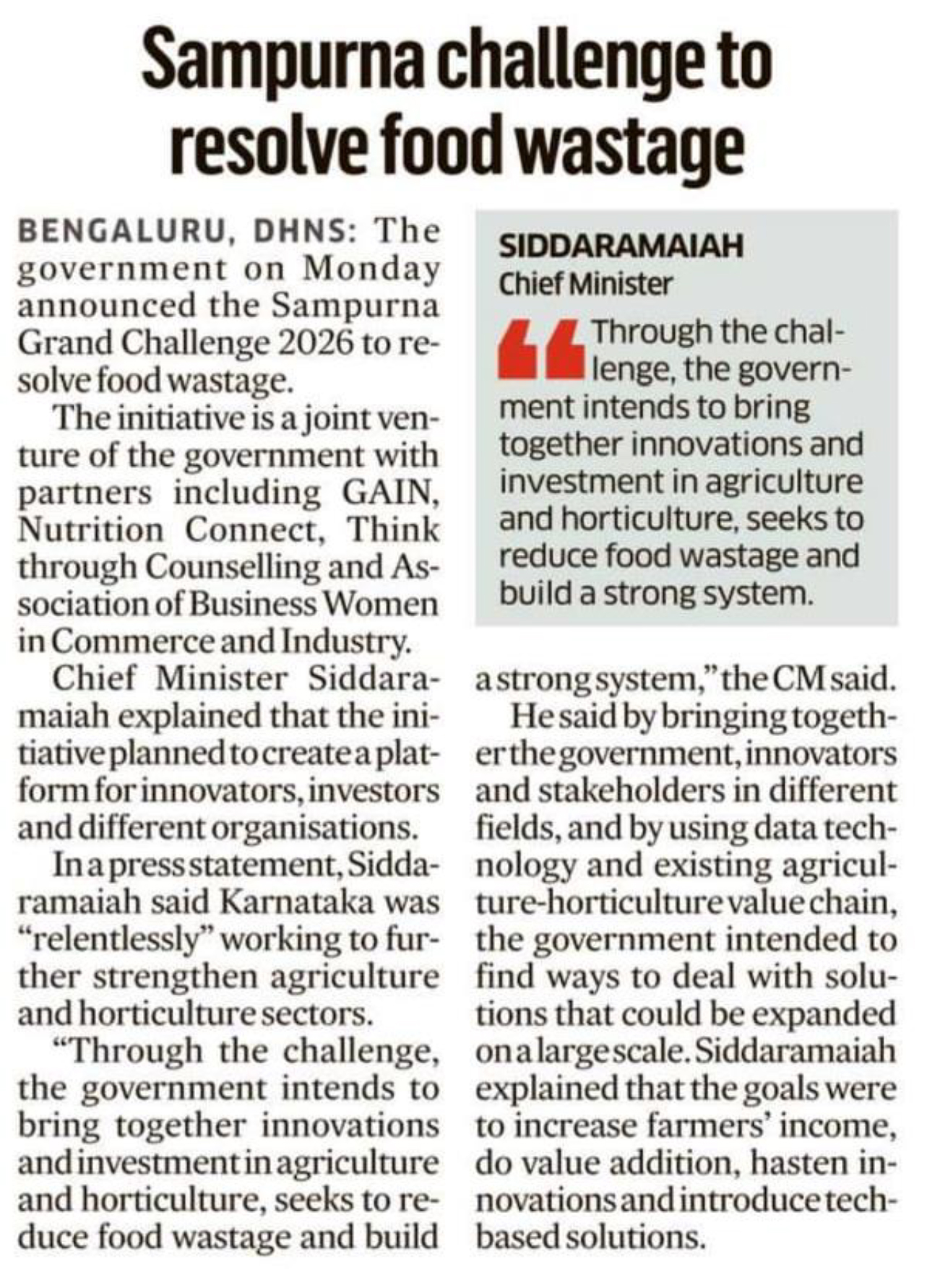
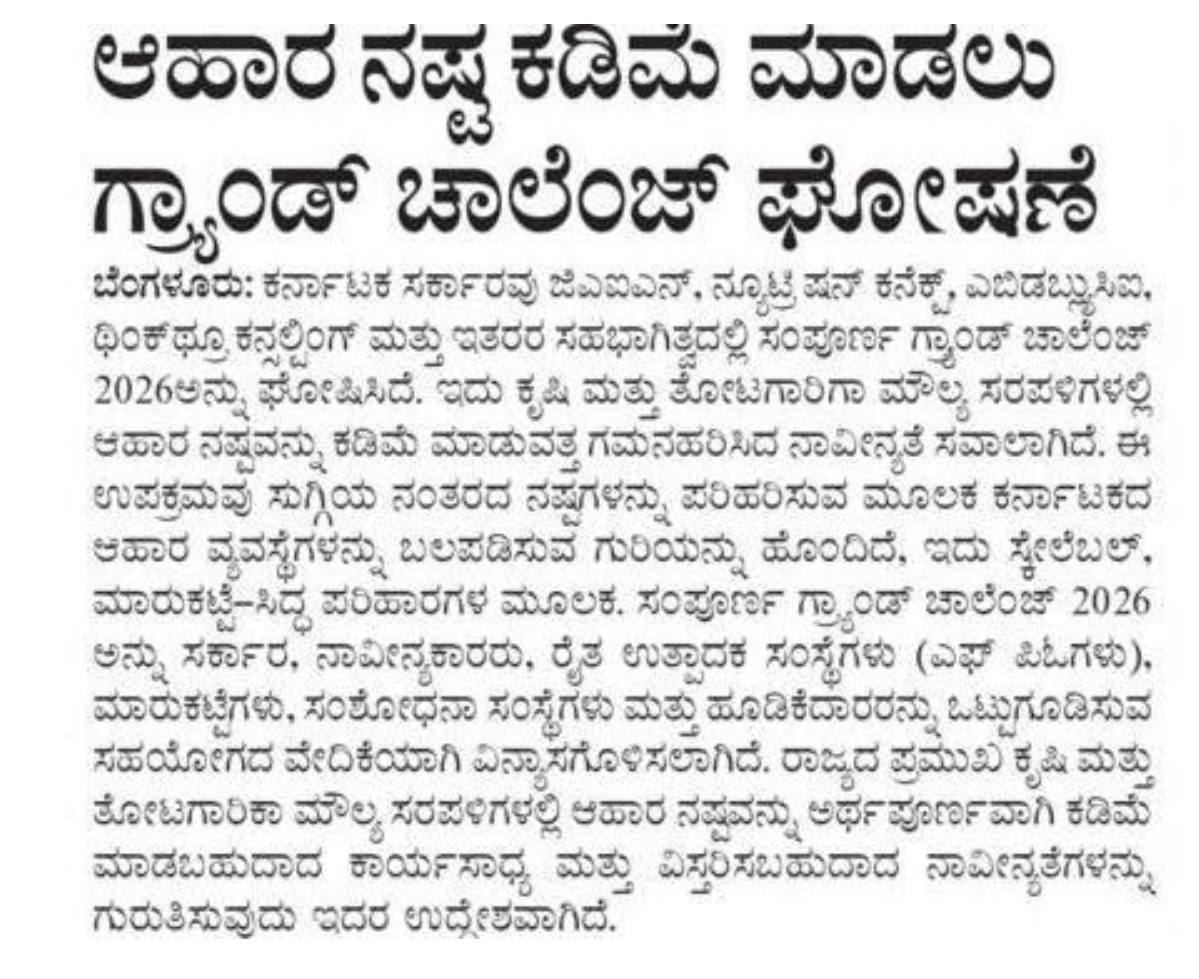
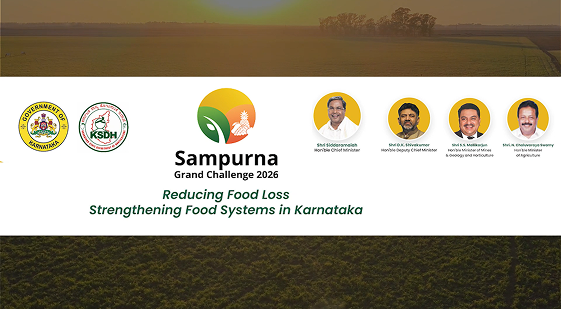
The Sampurna Grand Challenge 2026 is an innovation initiative launched by the Government of Karnataka in partnership with GAIN (Global Alliance for Improved Nutrition), Nutrition Connect, Thinkthrough Consulting (TTC), and ABWCI. It is a platform designed to spotlight and scale innovative, home-grown solutions that tackle food loss across Karnataka's horticulture value chains, by engaging startups, entrepreneurs, academic institutions, FPOs, and agri-enterprises. The initiative provides these innovators with a structured competition process, expert mentorship, access to a curated Deal Room with buyers, investors, and government stakeholders, and opportunities for post-challenge piloting and scale-up in collaboration with state departments and development partners. Building successful innovation challenges run by GAIN globally, the challenge fosters multi-sectoral collaboration by convening government, private sector, academia, and civil society to collectively advance Karnataka's vision for sustainable, resilient food systems, positioning the state as a frontrunner in driving transformative food system innovation.
The challenge offers enhanced visibility for your innovation, strengthened cross-sectoral partnerships, and access to an ecosystem that brings together government, industry, FPOs, and capital, creating a meaningful pathway from innovation to impact at scale within Karnataka.
Participating organizations stand to gain across multiple dimensions. Finalists will be connected to a curated Deal Room enabling meetings with buyers, investors, and market linkage partners. Winners will receive recognition and support for post-event piloting and scale-up in collaboration with state departments, private sector, and development partners.
The challenge is open to any legally registered organisation working on innovative solutions relevant to post-harvest food loss in Karnataka's horticulture sector. This includes startups and agri-tech companies, technology innovators and product developers, Farmer Producer Organisations (FPOs) and agri-enterprises, social enterprises and ecosystem organisations working in agriculture, food systems, and climate innovation, cooperatives, SHGs, community enterprises, and others. Applications are open to organisations at any stage of development; from early-stage innovators and research teams to scaling enterprises. Women-led organisations and youth innovators are strongly encouraged to apply.
No. Your organisation does not need to be headquartered in Karnataka. However, your solution must be deployable and scalable within Karnataka, and you should be able to demonstrate clear intent and capacity to operate in the state. Solutions that are already active in Karnataka, or that can be adapted to Karnataka's horticulture context, are particularly encouraged.
Each category has its own application form, structured into six parts: Part A (Organisation Details), Part B (Solution Innovation & Technical Feasibility), Part C (Scalability & Market Viability), Part D (Cross-Crop Replicability), Part E (Execution Capacity & Vision for Karnataka), and Part F (Mandatory Compliance Declarations). All forms also include an Eligibility Checker section at the beginning that must be completed before the main form becomes accessible.
Mandatory uploads are: (1) your registration certificate or document specifying the date and type of registration; and (2) your audited financial statements for the last 2 years, or bank statements for MSMEs and FPOs. Beyond these, most evidence uploads across other questions are optional but strongly encouraged — they strengthen your application with real data, case studies, pilot results, or technical documentation.
The application form is available in both English and Kannada.
Applications can be submitted in English or Kannada. Both languages are fully supported.
Yes. Each question specifies a maximum word limit (e.g. Max 200 words, Max 300 words). Please respect these limits as they ensure your responses remain focused and allow for consistent evaluation across all applications.
Yes. While the programme places special emphasis on Onion, Mango, Banana, Tomato, Grapes, Pomegranate, and Pineapple, solutions applicable to other crops are equally welcome provided they demonstrate clear potential for replication or adaptation across the seven priority crops. In the replicability section (Part D), you will be asked to indicate which of the seven priority crops your solution can be adapted for, and what changes would be required per crop.
Applications cannot be edited after formal submission. Please review all sections carefully before clicking the final "Submit Formal Application" button. Use the tab navigation to move between sections and verify your responses. If you have already submitted and believe there is a critical error, please contact the challenge team immediately through the official challenge communication channels.
The last date to submit your application is 31st May 2026.
Yes. Organisations shortlisted as semifinalists will receive capacity-building support. This is designed to help shortlisted organisations strengthen their pitches and implementation plans ahead of the final selection process.
Details of the specific support, funding, or partnership benefits provided to selected winners will be communicated through the official challenge channels and brochure. The challenge is designed as a platform to help solutions scale — connecting winners with government support, implementation pathways, and investor/partner networks, including through a curated Deal Room with buyers, investors, and market linkage partners. The focus is on enabling real deployment and scaling within Karnataka's horticulture value chains.
There are seven categories, each targeting a distinct intervention point in the post-harvest value chain. Understanding the core focus of each will help you identify the right fit:
Apply under the category that best reflects your PRIMARY intervention. Many solutions naturally span more than one category — that is by design. Choose where the core value of your solution is concentrated.
Yes. If your organisation has multiple distinct solutions that genuinely address different categories, you may submit a separate application for each category. Each application must represent a genuinely distinct solution meeting that category's eligibility criteria. One solution per application, one application per category.
Please refer to Question 22 above, which clearly elaborates the definition and boundaries of each category. Apply under the category that best represents your primary intervention, where the core value of your solution lies. The challenge is designed recognising that solutions can span multiple areas.
This depends on your primary intervention. If you help FPOs access finance to invest in post-harvest operations, apply to Category 5. If you build community aggregation hubs or collective marketing models, apply to Category 4. If you provide digital tools to help FPOs make better decisions, apply to Category 6. If you provide logistics services to FPOs, apply to Category 3. Refer to Question 22 for full category definitions to identify the best fit.
For any queries not addressed in this FAQ, please reach out to the Sampurna Grand Challenge team through the official challenge communication channels. This FAQ is intended as a guide and does not supersede the official challenge guidelines and terms.

GAIN is a Swiss-based foundation launched at the United Nations in 2002 to tackle the human suffering caused by malnutrition. Working in partnership with governments, businesses, and civil society, GAIN strives to transform food systems so that they deliver more nutritious, safe, and affordable food for all people. GAIN's work is driven by the conviction that everyone, regardless of income or geography, should have access to nutritious food every day.
GAIN works to identify and deliver context-specific solutions to the daily challenge of food insecurity faced by vulnerable populations. Recognizing that there is no "one-size-fits-all" model, GAIN develops alliances and implements tailored programmes using flexible and adaptive approaches. The organization builds and strengthens partnerships between governments, local and global businesses, and civil society to deliver sustainable improvements in nutrition at scale. Through these alliances, GAIN provides technical, financial, and policy support to key stakeholders within the food system. Evidence generated through GAIN's projects and programmes is used to inform, shape, and influence broader policies and actions toward nutrition-sensitive food systems. Headquartered in Geneva, Switzerland, GAIN operates representative offices in Denmark, The Netherlands, the United Kingdom, and the United States, along with country offices in Bangladesh, Ethiopia, India, Indonesia, Kenya, Mozambique, Nigeria, Pakistan, and Tanzania. In addition, GAIN's programmes and projects extend across other countries, particularly in Africa and Asia.
NC is a GAIN Global initiative designed to mobilize knowledge, share experiences, and stimulate dialogue on Public–Private Engagement (PPE) for nutrition. With a strong focus on amplifying global and in-country successes and lessons learned, Nutrition Connect addresses knowledge gaps through its three core pillars - Curation, Co-Creation, and Collaboration & Communication (The 3Cs). These pillars collectively drive thought leadership and action on public–private engagement aimed at food systems transformation. As a global knowledge hub, Nutrition Connect also serves as GAIN's center of expertise on innovation challenges and competitions, facilitating initiatives that promote innovation, partnership, and scalable solutions for sustainable and nutrition-sensitive food systems.
Thinkthrough Consulting (TTC) is a purpose-led multidisciplinary advisory firm specializing in sustainable development, with expertise spanning development sector advisory, sustainability & climate change, and business support services. Operating at the intersection of government, corporate, and civil society through a 'tri-sector approach', TTC delivers SDG-aligned, custom solutions that help clients navigate complex challenges and create measurable impact — from idea to implementation. With a track record of engagements with central and state governments (including MoHFW, MoE, and governments of UP, Rajasthan, MP, and others) and leading international organizations (World Bank, ADB, USAID, UNICEF, UNDP, UN Women, and GIZ, among others), TTC combines a multidisciplinary team, a Global Advisory Council, and strategic partnerships to connect global expertise with locally scalable solutions. For more details, visit: https://www.ttcglocal.com/
The Association of Business Women in Commerce & Industry (ABWCI), is a not-for-profit global chamber committed to advancing women in business by building a supportive ecosystem that fosters equity, inclusion, and shared prosperity. With a presence across 40+ countries and 14+ Indian states, ABWCI connects women entrepreneurs and women led businesses through initiatives spanning capacity building, access to finance, market linkages, and cross-border collaborations, while also driving research and policy advocacy. Anchored in its four core pillars—Access to Markets, Finance, Technology, and Entrepreneurial Ecosystems—ABWCI works to empower women-led enterprises by enabling meaningful networks, unlocking growth opportunities, and strengthening pathways to global markets and investment. For more details, visit: https://www.abwci.org/
Krishikalpa Foundation is a Not-For-Profit organization founded by experienced professionals from Agri Value Chain, Agri Businesses, venture capital, and innovative technology sectors. Its vision is "To Be The Most Respected Organization, Dedicated For Uplifting Farmers Lives and Drive the Sustainable Rural Transformation through Strengthening Agri Value Chains." Krishikalpa aims to enable changes through increasing adoption of technology, inducing behavior change amongst FPOs & Micro-Entrepreneurs, enabling farmer-centric policies, and facilitating creation of innovative farming solutions, with a key focus on augmenting revenues, improving viability, and minimizing overheads for stakeholders in agricultural value chains by addressing constraints including appropriate technology adoption at scale, collectivization, capacity skill development, first and last-mile ecosystem services, strong forward and backward integration, coupled with fund mobilization and favorable policy landscape. The foundation has facilitated direct market access to farmers by synergising Agri/food tech companies and FPOs/VLEs, offering features including access to inputs, community-based shared services like uberisation/common resource usages, logistics, warehousing and produce pooling, finance & financial services, insurance and ICT, extension education, crop advisory and technology, market linkage, capacity building, and knowledge.
MM Activ Sci-Tech Communications, India's leading organization in Tech Events, Branding, CorpComm, and B2B Media, celebrates 25 years of purpose, partnerships, and progress. With 200+ national and international B2B events, MM Activ has driven innovation across sectors including IT & Electronics, Biotechnology, Semiconductor, Quantum, Nanotechnology, AgriTech, ChemTech, Aerospace & Defence, Public Transport, Renewable Energy, Higher Education, Skills, R&D, Startups, and the UN SDGs—effectively connecting industry, academia, research, government, and global stakeholders. The organization also publishes specialized print and digital media in Biotech, Medtech, Food, and Agritech across India and Singapore, while its group company operates the Integrated CIDCO Exhibition & Convention Centre (CECC) in Navi Mumbai, reinforcing its leadership in the MICE industry. For more details, visit www.mmactiv.com
Fortuna PR is a full-service integrated marketing and public relations agency focused on delivering communication that drives real business impact. With decades of cumulative leadership experience, a strong in-house specialist team, an extensive network of senior journalists, and a pan-India presence, the firm brings both strategic depth and execution strength to every mandate.
At Fortuna PR, communication is treated as a growth engine. The work is designed not just to build visibility, but to influence outcomes, unlock opportunities, and create measurable value for businesses and institutions.
The agency works across strategic communication, destination and institutional branding, public relations, digital and social media management, technology-led solutions, crisis and reputation management, public advocacy, leadership positioning, and publishing.
Through multidisciplinary teams supported by strong analytics, monitoring, and reporting systems, Fortuna PR builds communication ecosystems that shape narratives, engage stakeholders, and enables the right environment for businesses to grow and thrive.
With a focus on clarity, consistency, and performance, Fortuna PR delivers outcomes that are visible, measurable, and aligned with business objectives across traditional, digital, and emerging media.